
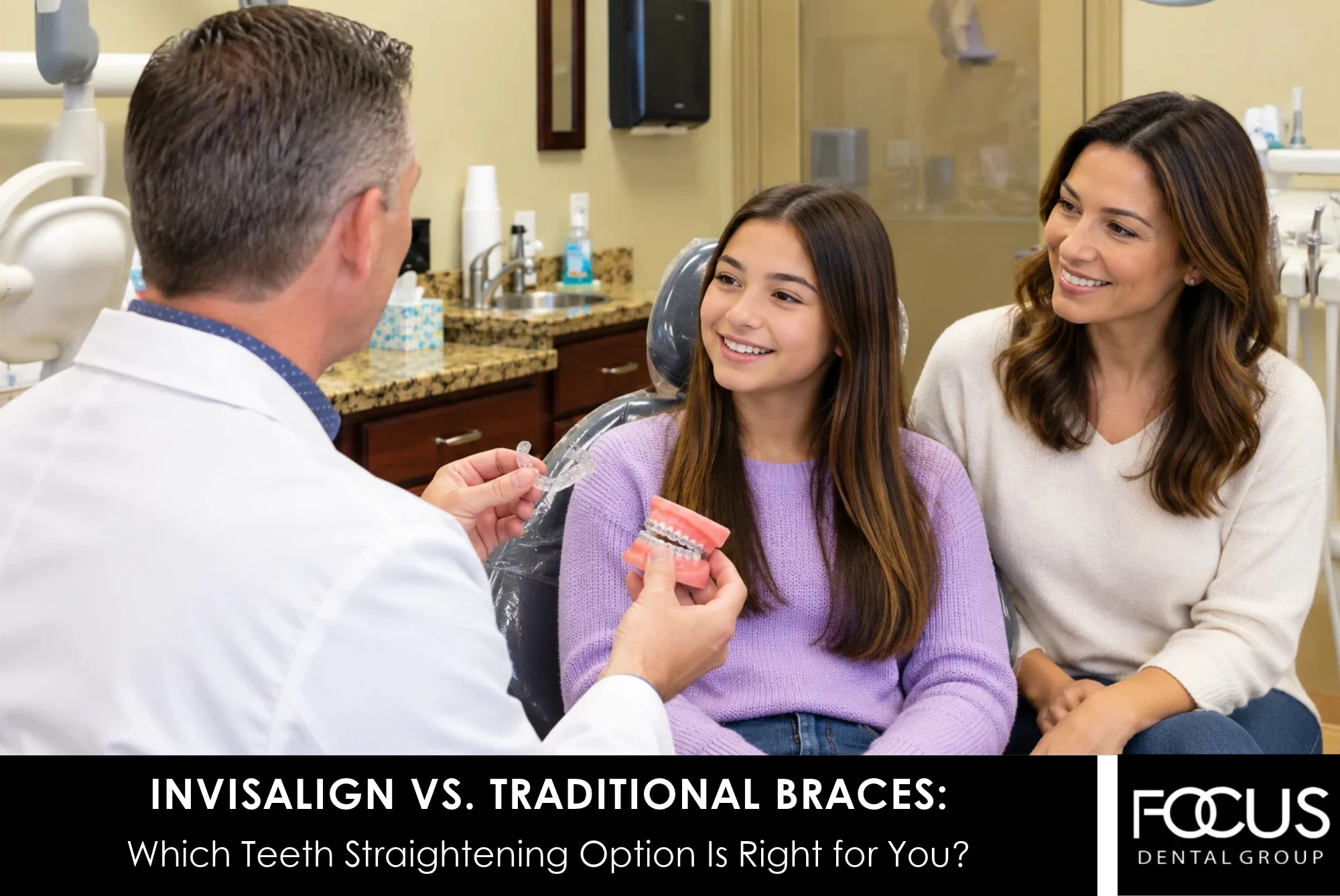
A straighter smile can improve more than appearance. Properly aligned teeth may be easier to clean, and correcting certain bite problems can improve dental function. Two widely used orthodontic treatment options are Invisalign clear aligners and traditional braces.
For patients considering teeth straightening in Midvale, Utah, understanding the advantages and limitations of each approach can help them prepare for an orthodontic consultation.
How Does Invisalign Work?
Invisalign uses a series of customized, removable clear plastic aligners to gradually move teeth into planned positions.
Patients typically wear their aligners for 20 to 22 hours daily, removing them for eating, drinking beverages other than water, brushing, and flossing.
Treatment begins with an evaluation of tooth alignment, bite relationships, oral health, and the movements required to achieve the desired result.
How Do Traditional Braces Work?
Traditional braces use brackets attached to the teeth and orthodontic wires to apply controlled forces that gradually reposition teeth.
Modern braces can treat a broad range of orthodontic problems, including crowding, spacing, rotated teeth, and complex bite discrepancies.
Unlike removable aligners, braces remain attached throughout treatment, eliminating the need for patients to remember to wear them.
Invisalign vs. Braces: Comparing the Benefits
Invisalign offers a discreet appearance, removability, and fewer restrictions on food choices. Patients can brush and floss without navigating around fixed brackets and wires.
Traditional braces provide continuous tooth-moving forces and may offer advantages for certain complicated movements or patients who struggle with consistent aligner wear.
Both methods can be effective when appropriately selected and supervised.
Which Option Works Faster?
Treatment duration depends on the severity of the alignment problem, the type of tooth movements required, and patient cooperation.
Some mild Invisalign cases can be completed relatively quickly, while complex cases may require considerably longer treatment. Traditional braces also vary widely in duration.
Neither treatment should be considered universally faster.
What About Comfort and Maintenance?
Both Invisalign and braces may cause temporary soreness as teeth begin moving.
Aligners can produce pressure and occasional irritation, while braces may irritate the cheeks or lips. Good oral hygiene is essential with either option.
Why Is an Orthodontic Evaluation Important?
Not every patient is a candidate for clear aligners. Severe bite discrepancies, complex tooth rotations, and other orthodontic conditions may require braces or additional treatment techniques.
A clinical examination, appropriate imaging, and individualized treatment planning help determine which approach is most suitable.
Frequently Asked Questions About Invisalign and Braces
Is Invisalign as Effective as Braces?
Invisalign can effectively treat many mild to moderate orthodontic problems and selected complex cases. However, braces may offer greater predictability for some difficult tooth movements.
Can Adults Get Invisalign?
Yes. Adults frequently undergo orthodontic treatment, provided their teeth, gums, and supporting bone are healthy enough for planned movement.
Can You Eat With Invisalign?
Aligners should generally be removed before eating and drinking anything other than water.
Are Braces Better for Teenagers?
Not necessarily. Treatment selection depends on orthodontic needs, maturity, and the teenager’s ability to follow instructions.
Will My Teeth Stay Straight After Treatment?
Retainers are usually necessary after either Invisalign or braces to help prevent teeth from shifting.
Contact Information
Focus Dental Group 6770 S 900 E, Suite 301 Midvale, UT 84047 Phone: (801) 255-7101 Website: focusdentalgroup.com Request an Appointment
Contact Focus Dental Group to discuss teeth straightening options and available orthodontic evaluation services.