

Enjoy Hot Coffee and Cold Treats Again Without the Wince
A sharp jolt from ice water, a sting when you bite into something sweet, or a twinge when cold air hits your teeth usually means the protective layers of a tooth have worn thin and the dentin underneath is exposed. At Focus Dental Group in Midvale, UT , we find out why your teeth are sensitive and treat that cause, so the comfort lasts.
Request an AppointmentWhy Teeth Become Sensitive
Enamel covers the crown of each tooth and gum tissue covers the roots. Under both is dentin, a layer full of tiny channels that lead to the nerve. When enamel wears away or gums pull back, heat, cold, sugar, and acid reach those channels and set off the sudden, sharp pain people know as tooth sensitivity. Common causes include:
- Enamel worn down by brushing too hard, a hard-bristled toothbrush, or frequent acidic foods and drinks
- Receding gums that expose the root surface, often a result of gum disease
- Cavities, worn fillings, or leaky edges around older dental work
- Cracked or chipped teeth that let temperature reach the inside of the tooth
- Grinding or clenching, especially at night, which wears enamel and strains teeth
- Short-term sensitivity after teeth whitening, a new filling, or a cleaning
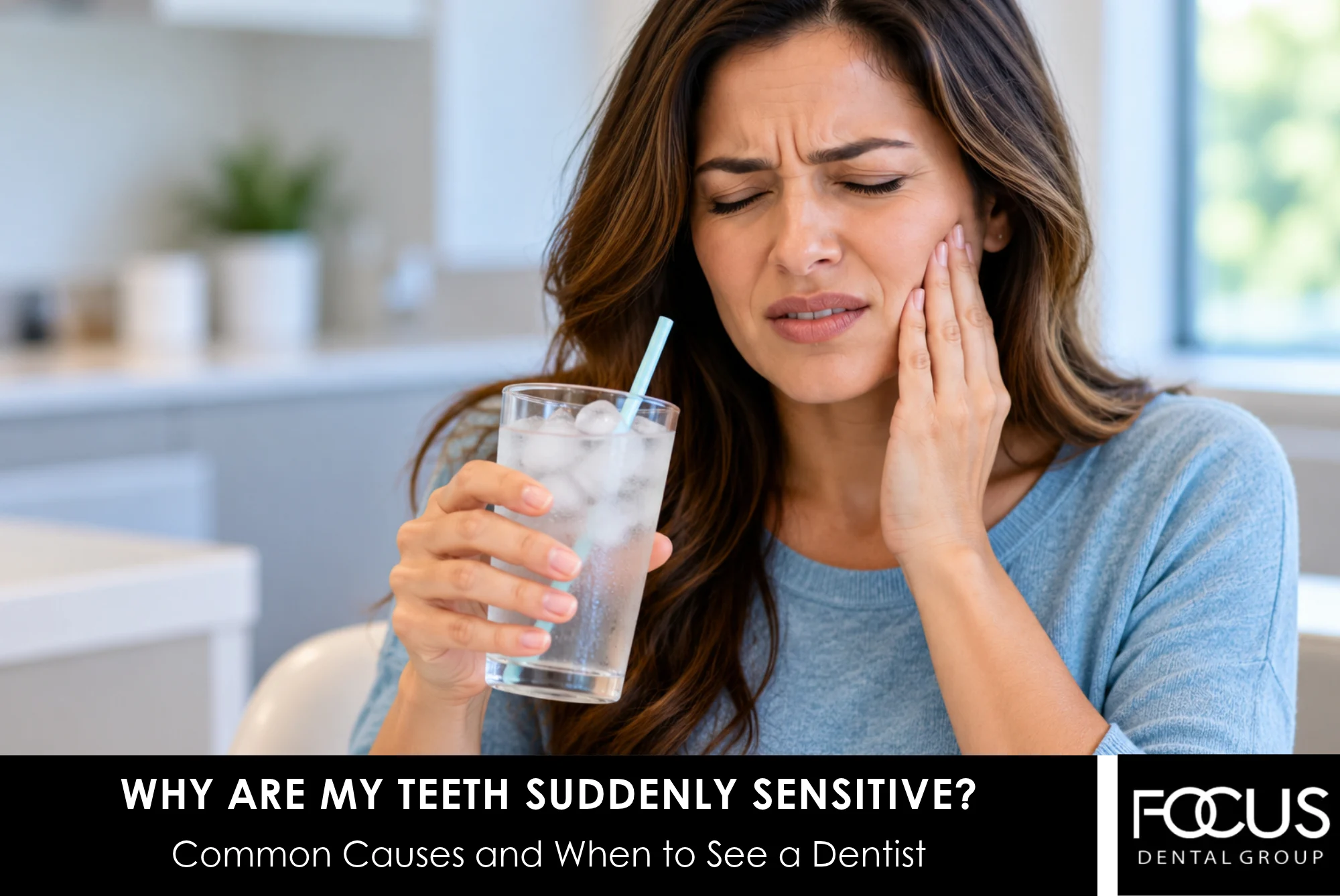
Signs Your Sensitivity Needs a Closer Look
Typical sensitivity is a quick zing that fades within a few seconds once the trigger is gone. You may feel it with hot or cold foods and drinks, sweet or sour foods, cold air, or while brushing and flossing. Pain that lingers for a minute or longer, wakes you at night, or centers on one tooth is different. That pattern can point to deep decay or a tooth infection that needs prompt care.
How We Treat Sensitive Teeth
Your visit starts with an exam and, when needed, X-rays to check for decay, cracks, gum recession, and wear patterns. Once we know the cause, we match the treatment to it:
- Desensitizing toothpaste and in-office fluoride varnish to strengthen enamel and block the channels in the dentin
- Bonding or sealants to cover exposed root surfaces
- Fillings, or dental crowns for teeth with larger areas of decay or damage
- Gum care to address recession and gum disease
- A custom night guard if grinding is wearing your teeth down
- Root canal treatment when sensitivity comes from an inflamed or damaged nerve
If sensitive teeth make dental visits stressful, our WaterLase iPlus laser offers a gentler approach for many procedures, and sedation dentistry can help you stay relaxed while we work.
Reducing Sensitivity at Home
A few daily habits make a real difference. Brush with a soft-bristled toothbrush using light, circular strokes. Use a toothpaste made for sensitive teeth every day, since it takes a few weeks to work fully. Cut back on soda, sports drinks, citrus, and other acidic foods, and wait about 30 minutes after eating them before you brush so softened enamel can recover. Regular dental checkups let us catch thinning enamel, early decay, and gum recession before they turn into bigger problems.
Sensitivity is one of many problems we help patients with. You can learn more about the other dental conditions we treat, or call Focus Dental Group at (801) 255-7101 to set up a visit.
Tooth Sensitivity FAQs
Why are my teeth suddenly sensitive?
New sensitivity often comes from a cavity, a cracked tooth, gum recession, worn enamel, or recent dental work such as whitening or a new filling. An exam is the fastest way to find out which one is behind it.
Can tooth sensitivity go away on its own?
Mild sensitivity after whitening or a dental procedure usually fades within a few days. Sensitivity caused by worn enamel, recession, or decay tends to stay or get worse until the cause is treated, though desensitizing toothpaste and fluoride can bring real relief.
Is tooth sensitivity a sign of a cavity?
It can be. Sensitivity to sweets, or sensitivity limited to one tooth, often points to decay. Schedule an exam so a small cavity can be filled before it reaches the nerve.
Does teeth whitening cause sensitivity?
Whitening can cause temporary sensitivity that typically fades within a few days. Using a sensitivity toothpaste before and after treatment helps, and we can adjust your whitening plan if your teeth are prone to it.
What toothpaste is best for sensitive teeth?
Look for a toothpaste labeled for sensitive teeth. These contain ingredients that calm the nerve or block the tiny channels in the dentin. Use it twice a day for several weeks to get the full effect.
Can gum recession cause sensitivity?
Yes. Root surfaces do not have enamel, so when gums recede and expose them, they react quickly to temperature and touch. Treating the recession and covering the exposed root can reduce the discomfort.
When should I see a dentist for sensitive teeth?
Book a visit if sensitivity lasts more than a few days, centers on one tooth, lingers after hot or cold exposure, or comes with swelling or a bad taste. These signs can mean decay, a crack, or an infection.
Get Relief From Sensitive Teeth
You don’t have to keep avoiding cold drinks or chewing on one side. Our team at Focus Dental Group will find what is causing your sensitivity and explain your options clearly. Call (801) 255-7101 or request an appointment online to visit our office in Midvale, UT .