
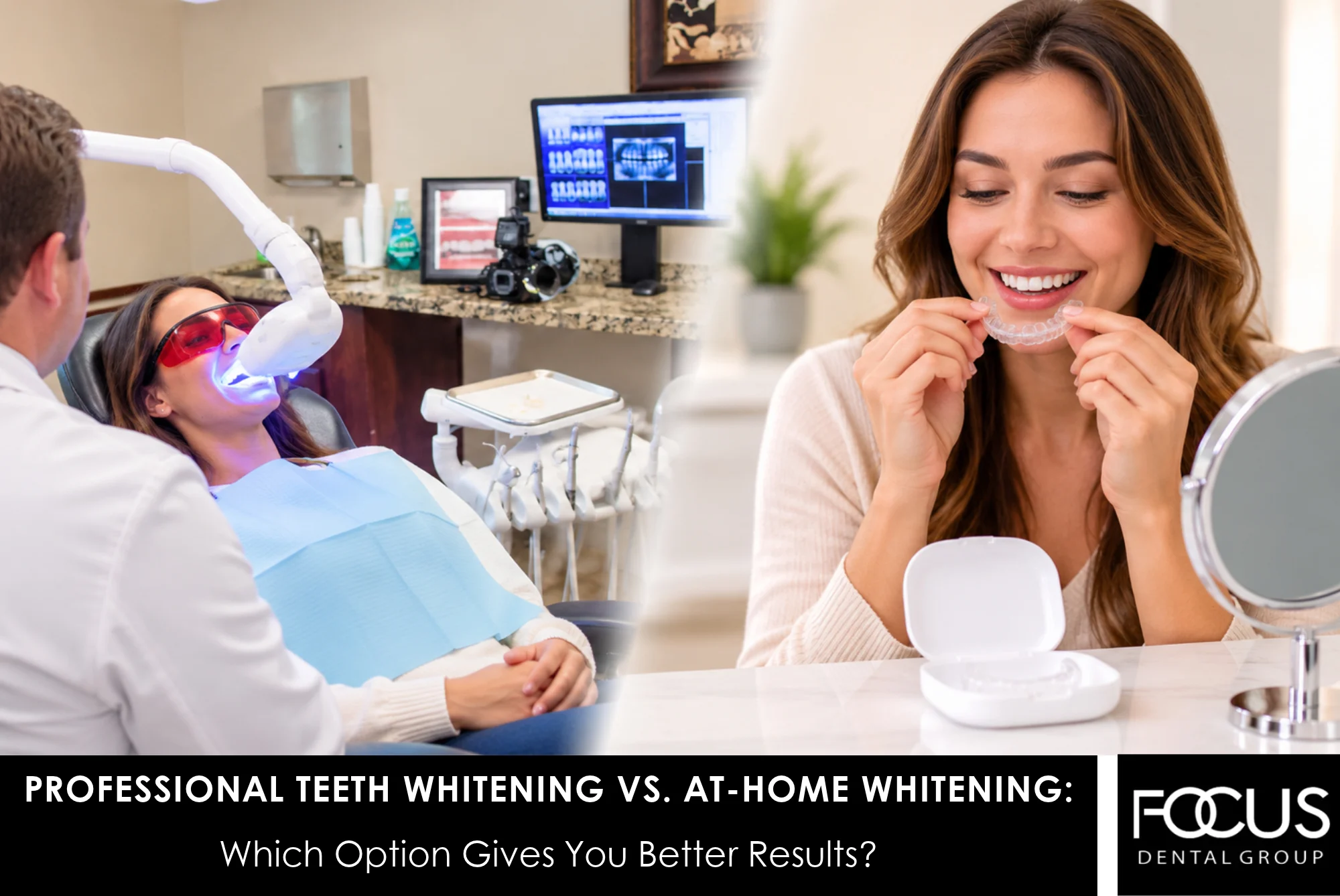
A brighter smile is a common cosmetic dentistry goal, but not every whitening product produces the same results. Professional teeth whitening and over-the-counter whitening products differ in their ingredients, application methods, supervision, and expected outcomes.
Understanding these differences can help patients select an effective approach while minimizing tooth sensitivity and gum irritation.
Why Do Teeth Become Discolored?
Tooth discoloration can develop from coffee, tea, tobacco, red wine, aging, and the accumulation of surface stains.
Some discoloration originates within the tooth structure and may be associated with previous trauma, medications, or developmental conditions.
Because different types of discoloration respond differently to whitening, a dental examination can help identify the most appropriate treatment.
How Does Professional Teeth Whitening Work?
Professional whitening generally uses hydrogen peroxide or carbamide peroxide to break down stain-producing molecules within the teeth.
Depending on the technique, treatment may involve in-office whitening or dentist-supervised trays used at home.
Professional supervision allows the dentist to evaluate existing restorations, identify sensitivity risks, and recommend an appropriate whitening concentration and schedule.
How Do At-Home Whitening Products Work?
Over-the-counter whitening strips, gels, and trays may contain peroxide-based bleaching agents at concentrations intended for consumer use.
Whitening toothpaste primarily removes external stains through mild abrasives or other stain-removing ingredients. Most whitening toothpastes do not significantly change the underlying natural tooth color.
Results depend on the product, consistency of use, and the type of discoloration.
Which Whitening Method Produces Faster Results?
In-office professional whitening can produce noticeable changes after a single appointment, although multiple treatments may be needed.
At-home products often require repeated applications over several days or weeks.
Professional whitening does not guarantee a particular shade, and results vary between patients.
Can Whitening Damage Teeth?
When used appropriately, peroxide-based whitening is generally considered safe for suitable patients. However, temporary tooth sensitivity and gum irritation are common potential side effects.
Excessive use or improper application can increase these problems.
Whitening should be postponed when untreated cavities, significant gum inflammation, or other dental conditions require attention.
Frequently Asked Questions About Teeth Whitening
How Long Does Teeth Whitening Last?
Results can last months or longer, depending on diet, oral hygiene, tobacco exposure, and maintenance habits.
Does Whitening Work on Crowns or Veneers?
No. Whitening products do not change the color of crowns, veneers, or tooth-colored fillings.
Is Professional Whitening Better for Sensitive Teeth?
Dental supervision may help patients with sensitivity select an appropriate concentration, treatment schedule, or alternative approach.
Can Yellow Teeth Become White Again?
Many naturally yellow or externally stained teeth respond to whitening. However, certain intrinsic stains may require alternative cosmetic treatments.
Should I Have My Teeth Cleaned Before Whitening?
A dental evaluation and removal of significant plaque or surface deposits may improve treatment planning and help identify problems that should be addressed first.
Contact Information
Focus Dental Group 6770 S 900 E, Suite 301 Midvale, UT 84047 Phone: (801) 255-7101 Website: focusdentalgroup.com Request an Appointment
Contact Focus Dental Group to ask about professional teeth whitening and cosmetic dental consultations.