
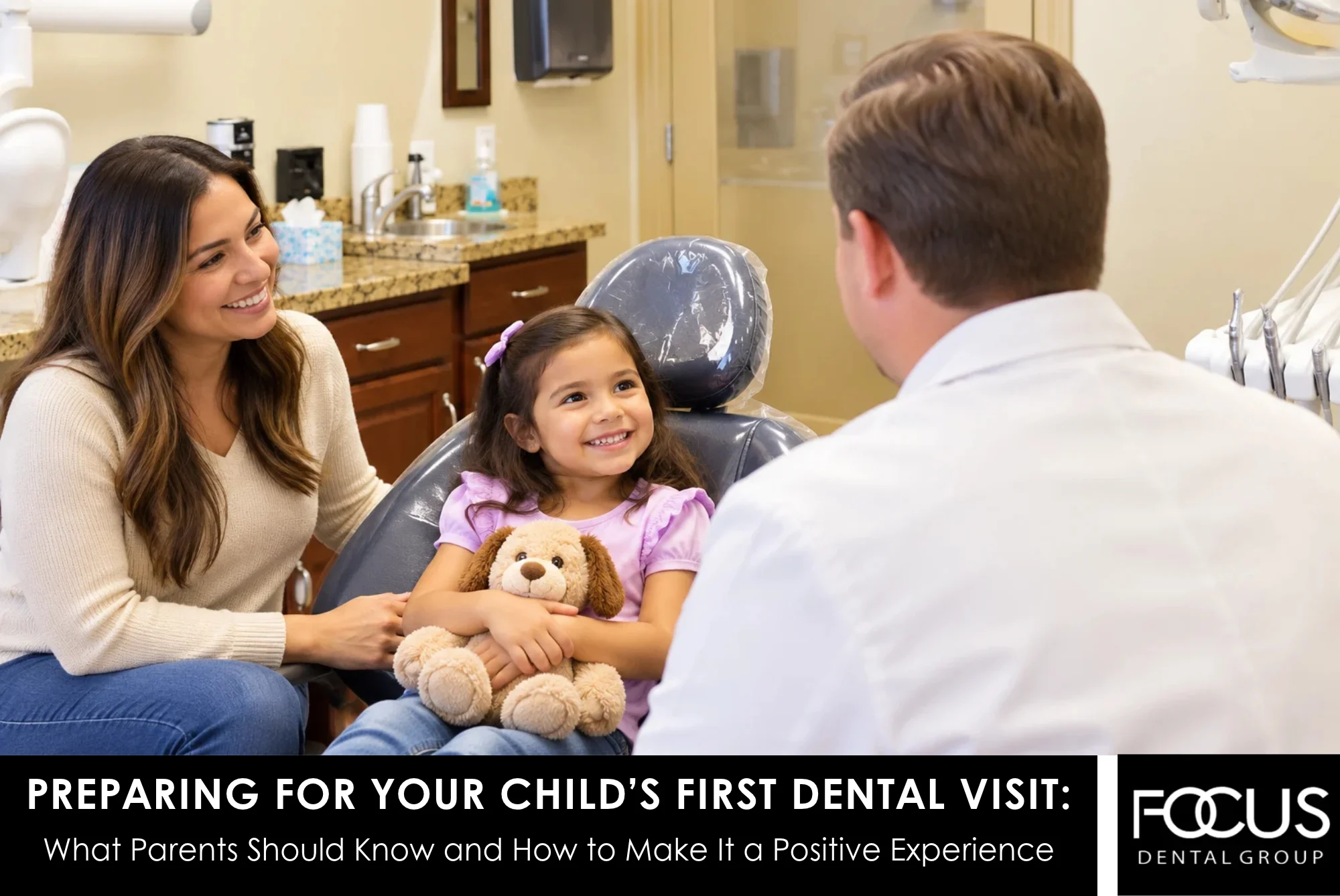
A child’s first dental appointment is an important milestone in establishing lifelong oral health habits. Early visits allow dental professionals to evaluate developing teeth, identify potential concerns, and provide parents with guidance about brushing, fluoride, nutrition, and cavity prevention.
Creating a positive introduction to dental care can also help children become more comfortable with future appointments.
When Should a Child Have Their First Dental Visit?
The American Academy of Pediatric Dentistry recommends a child’s first dental visit when the first tooth appears or no later than the first birthday.
Early visits help establish a dental home and allow parents to receive personalized guidance before significant dental problems develop.
What Happens During the First Appointment?
The dentist may examine the child’s teeth, gums, bite, and oral development.
For very young children, the examination may be performed while the child sits on a parent’s lap.
The dental team may also discuss toothbrushing, fluoride exposure, feeding practices, thumb-sucking, pacifier use, and ways to reduce cavity risk.
How Can Parents Prepare Their Child?
Parents can explain the visit using simple, positive language.
Reading age-appropriate books about dental visits or practicing opening wide at home may help children understand what to expect.
Avoid frightening descriptions or promises that nothing will hurt. Instead, reassure children that the dental team will explain what is happening and help them feel comfortable.
How Should Parents Care for Baby Teeth?
Begin cleaning the gums before teeth erupt and brush twice daily once the first tooth appears.
For children younger than three, use a smear of fluoride toothpaste approximately the size of a grain of rice. For ages three through six, use a pea-sized amount and supervise brushing.
Parents should help children brush until they have the coordination and maturity to do so effectively.
Why Are Baby Teeth Important?
Primary teeth support chewing, speech development, and the maintenance of space for permanent teeth.
Untreated cavities in baby teeth can cause pain, infection, eating difficulties, and disruptions to daily activities.
Preventive care is important even though primary teeth eventually fall out.
Frequently Asked Questions About First Dental Visits
What If My Child Cries During the Appointment?
Crying or hesitation is common in young children. Dental professionals can use age-appropriate approaches and may recommend shorter introductory visits.
Does My Child Need X-Rays at the First Visit?
Not necessarily. Dental X-rays are recommended based on clinical findings and individual needs rather than age alone.
Should My Child Stop Using a Pacifier?
Prolonged nonnutritive sucking habits may affect developing teeth and jaws. Your dentist can provide age-appropriate guidance.
Can Toddlers Get Cavities?
Yes. Cavities can develop soon after teeth erupt, particularly when frequent sugar exposure and inadequate brushing are present.
How Often Should Children See the Dentist?
Recall intervals depend on the child’s oral health and cavity risk. Many children are evaluated approximately every six months, but individualized schedules may differ.
Contact Information
Focus Dental Group 6770 S 900 E, Suite 301 Midvale, UT 84047 Phone: (801) 255-7101 Website: focusdentalgroup.com Request an Appointment
Contact Focus Dental Group to ask about children’s dental appointments and preparing for a first visit.