
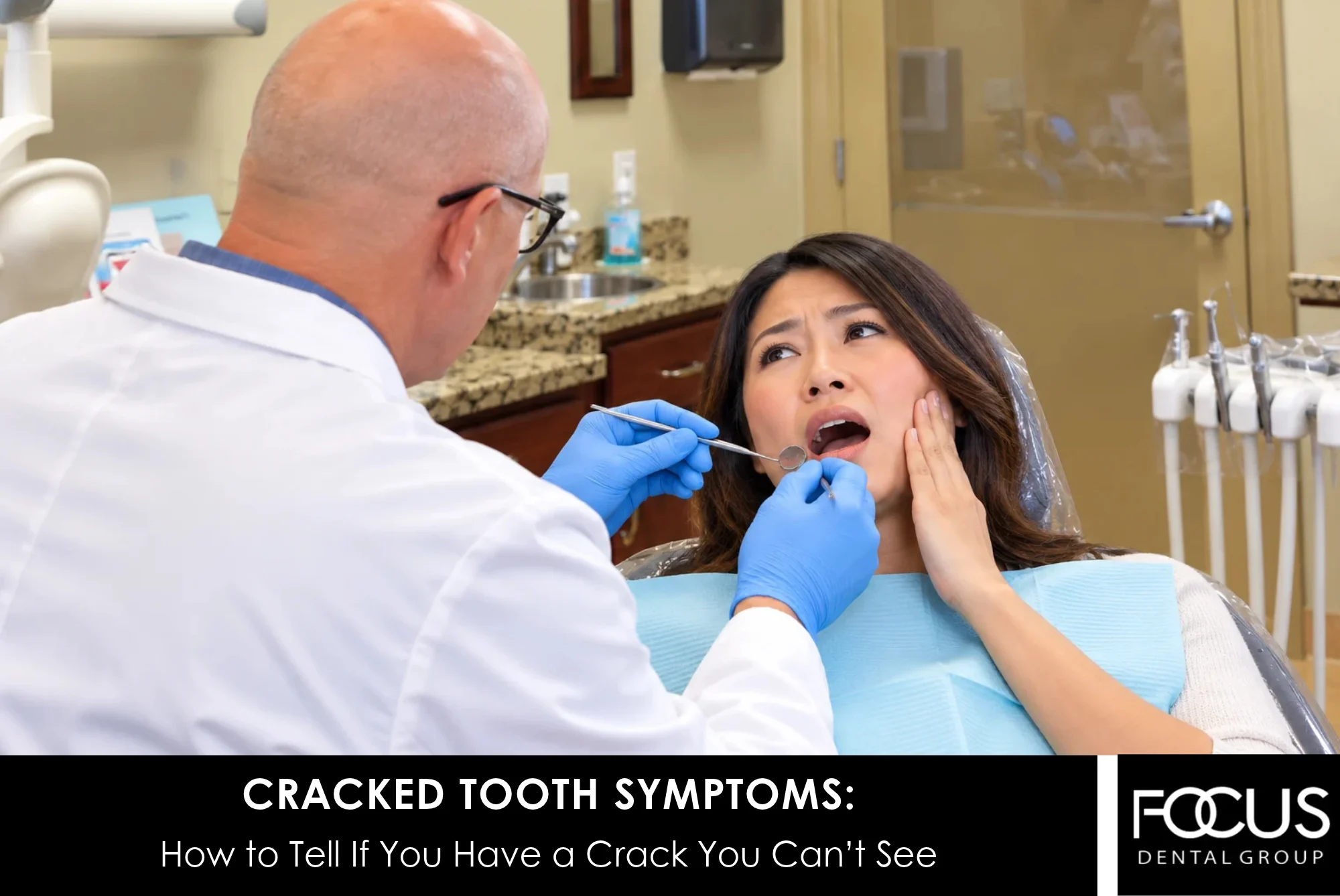
A cracked tooth can cause significant discomfort even when no visible damage appears on the tooth’s surface. Some cracks are extremely small, extend beneath the gums, or are difficult to identify without specialized examination techniques.
Early diagnosis is important because cracks can progress and compromise the tooth’s long-term prognosis.
What Causes Teeth to Crack?
Cracks may develop from biting hard objects, dental trauma, teeth grinding, large restorations, or accumulated mechanical stress.
Natural changes in tooth structure with age can also contribute to fracture risk.
What Are the Symptoms of a Cracked Tooth?
Common symptoms include sharp pain when biting, discomfort when releasing biting pressure, sensitivity to cold, and intermittent pain that is difficult to localize.
Some cracked teeth cause few symptoms until the fracture progresses.
Why Are Some Tooth Cracks Invisible?
Hairline cracks may be too narrow to see during routine examination.
Additionally, cracks may extend beneath restorations or into areas that are difficult to visualize.
Not all cracks appear on standard dental X-rays, particularly when the fracture runs parallel to the X-ray beam.
How Do Dentists Diagnose Cracked Teeth?
Dentists may use magnification, transillumination, bite-testing instruments, periodontal probing, and selected imaging techniques.
Removing an existing restoration may sometimes be necessary to evaluate suspected structural damage.
Can a Cracked Tooth Be Saved?
Treatment depends on the location, direction, and depth of the crack.
A crown or bonded restoration may protect certain cracked teeth. Root canal treatment may be required if the pulp becomes irreversibly inflamed or infected.
A crack extending deeply into the root or separating the tooth into segments may make extraction necessary.
Frequently Asked Questions About Cracked Teeth
Can a Cracked Tooth Heal Naturally?
No. Unlike bone, a structural tooth fracture does not heal by rejoining the cracked segments.
Can a Cracked Tooth Hurt Only When Chewing?
Yes. Pain during biting or release is a characteristic symptom of some cracked teeth.
Does Every Cracked Tooth Need a Crown?
No. Treatment depends on crack severity and location. Superficial enamel craze lines may require no restorative treatment.
Can a Cracked Tooth Become Infected?
Yes. A crack may permit bacterial entry and contribute to pulpal inflammation or infection.
Is a Cracked Tooth a Dental Emergency?
Severe pain, swelling, or significant fracture requires prompt evaluation. Even mild recurring symptoms should not be ignored.
Contact Information
Focus Dental Group 6770 S 900 E, Suite 301 Midvale, UT 84047 Phone: (801) 255-7101 Website: focusdentalgroup.com Request an Appointment
Contact Focus Dental Group if you suspect a cracked tooth or experience unexplained pain when chewing.