
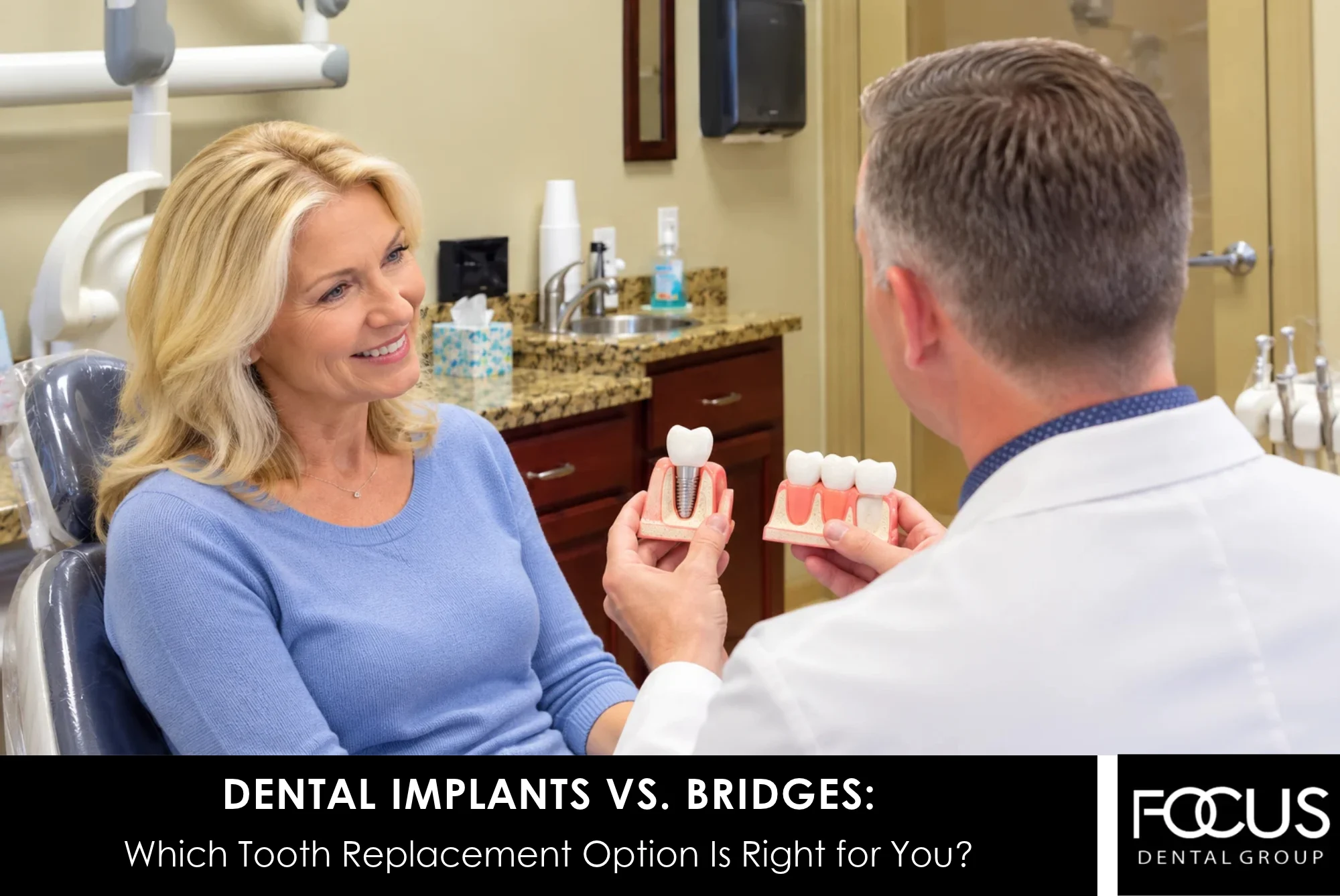
Replacing missing teeth can improve chewing function, speech, appearance, and overall oral health. Dental implants and fixed dental bridges are two established approaches for replacing one or more missing teeth.
Although both can restore a functional smile, they differ in how they are supported, their treatment requirements, maintenance, and long-term considerations.
What Is a Dental Implant?
A dental implant is a biocompatible fixture, commonly made from titanium, placed into the jawbone to support a replacement tooth.
After appropriate healing and integration with surrounding bone, the implant can support a crown, bridge, or denture.
Implants generally do not require preparation of adjacent healthy teeth.
What Is a Dental Bridge?
A conventional fixed dental bridge replaces a missing tooth using an artificial tooth supported by neighboring teeth.
These supporting teeth are often prepared to receive crowns.
Other bridge designs, including resin-bonded bridges, may be appropriate in selected situations.
How Do Implants and Bridges Compare?
Dental implants replace missing teeth independently and can help preserve bone around the implant through functional loading.
Traditional bridges usually avoid implant surgery and may be completed in a shorter treatment period.
However, conventional bridges may require modification of adjacent teeth, while implants require adequate bone and suitable medical conditions.
Which Option Lasts Longer?
Both implants and bridges can provide many years of service.
Implants have high long-term survival rates in appropriately selected patients, but implant crowns and other components may require repair or replacement.
Bridges can also function for many years, depending on oral hygiene, supporting tooth health, bite forces, and restoration design.
How Do Costs Compare?
Implants often have higher initial costs because treatment may involve surgery, imaging, and multiple restorative components.
Bridges may have lower upfront costs, although future replacement and maintenance should also be considered.
Individual treatment estimates are necessary for an accurate comparison.
Frequently Asked Questions About Implants and Bridges
Are Dental Implants Better Than Bridges?
Neither is universally better. The appropriate choice depends on oral health, neighboring teeth, bone availability, medical history, and patient preferences.
Do Dental Implants Prevent Bone Loss?
Implants can help maintain bone near the implant site, but they do not completely prevent all future changes in jawbone volume.
Can You Get an Implant Years After Losing a Tooth?
Often, yes. Some patients require bone grafting or other preparatory treatment.
Is Getting a Dental Bridge Painful?
Local anesthesia is commonly used during tooth preparation to minimize discomfort.
How Do You Clean Under a Dental Bridge?
Special floss threaders, interdental brushes, or other recommended devices help clean beneath the replacement tooth.
Contact Information
Focus Dental Group 6770 S 900 E, Suite 301 Midvale, UT 84047 Phone: (801) 255-7101 Website: focusdentalgroup.com Request an Appointment
Contact Focus Dental Group to discuss tooth replacement options and appropriate restorative consultations.