
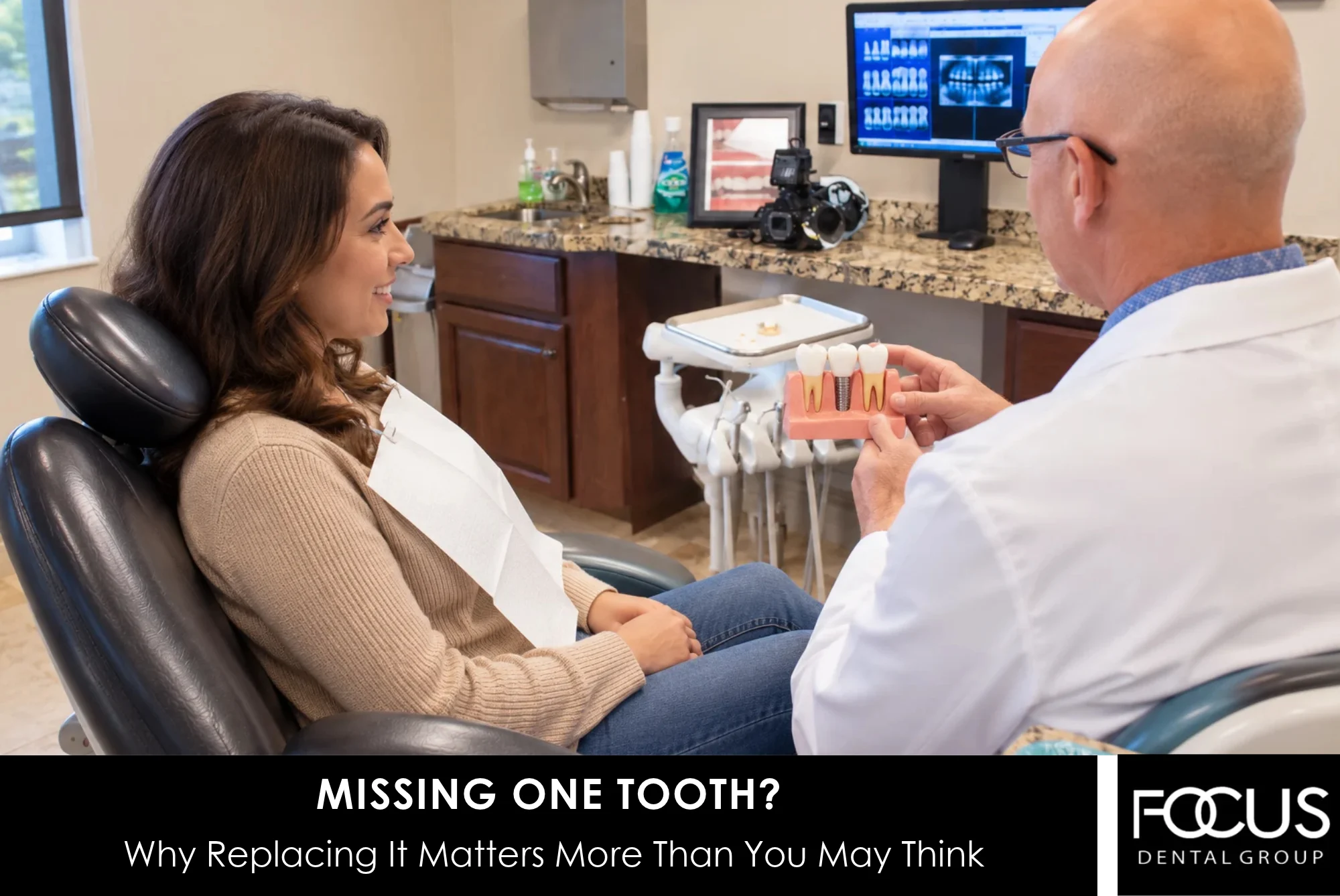
Losing a single tooth may seem like a minor concern, especially when the gap is located toward the back of the mouth. However, even one missing tooth can influence chewing, neighboring teeth, bite relationships, and long-term oral health.
Replacing a missing tooth is not always mandatory, but understanding the possible consequences can help patients make informed decisions.
What Happens After You Lose a Tooth?
Following tooth loss, the jawbone in the area no longer receives the same stimulation from the natural tooth root.
This can contribute to localized bone remodeling and reduction in bone volume.
Neighboring teeth may also gradually tilt or shift toward the open space, depending on the location and existing bite.
Can One Missing Tooth Affect Chewing?
Yes. Missing teeth may reduce chewing efficiency or encourage patients to favor one side of the mouth.
Over time, altered chewing patterns can affect how forces are distributed across remaining teeth.
Will Other Teeth Shift Into the Gap?
Tooth movement is possible, particularly when neighboring teeth lack stable contact relationships.
Opposing teeth may also overerupt into the unoccupied space.
These changes can complicate future restorative treatment.
What Are the Options for Replacing One Tooth?
Common options include a dental implant with a crown, a fixed dental bridge, or a removable partial denture.
In selected circumstances, monitoring the space without replacement may be reasonable.
The appropriate recommendation depends on tooth location, function, oral health, and patient goals.
Why Is Early Evaluation Helpful?
An early consultation allows the dentist to assess bone conditions, neighboring teeth, bite relationships, and potential treatment options before significant changes occur.
Frequently Asked Questions About Missing Teeth
Do I Need to Replace a Missing Back Tooth?
Not always, but replacing it may improve chewing and help maintain tooth position. An individualized assessment is important.
Can One Missing Tooth Change My Bite?
Yes. Some patients develop changes in tooth position and occlusal relationships.
Can a Missing Tooth Cause Bone Loss?
Loss of a natural tooth is commonly followed by localized alveolar bone remodeling.
What Is the Most Natural-Feeling Replacement?
Many patients find implant-supported crowns comfortable and stable, although suitability varies.
Is It Too Late to Replace a Tooth Lost Years Ago?
Often not. Treatment may still be possible, sometimes with additional procedures.
Contact Information
Focus Dental Group 6770 S 900 E, Suite 301 Midvale, UT 84047 Phone: (801) 255-7101 Website: focusdentalgroup.com Request an Appointment
Contact Focus Dental Group to discuss available solutions for a missing tooth.