
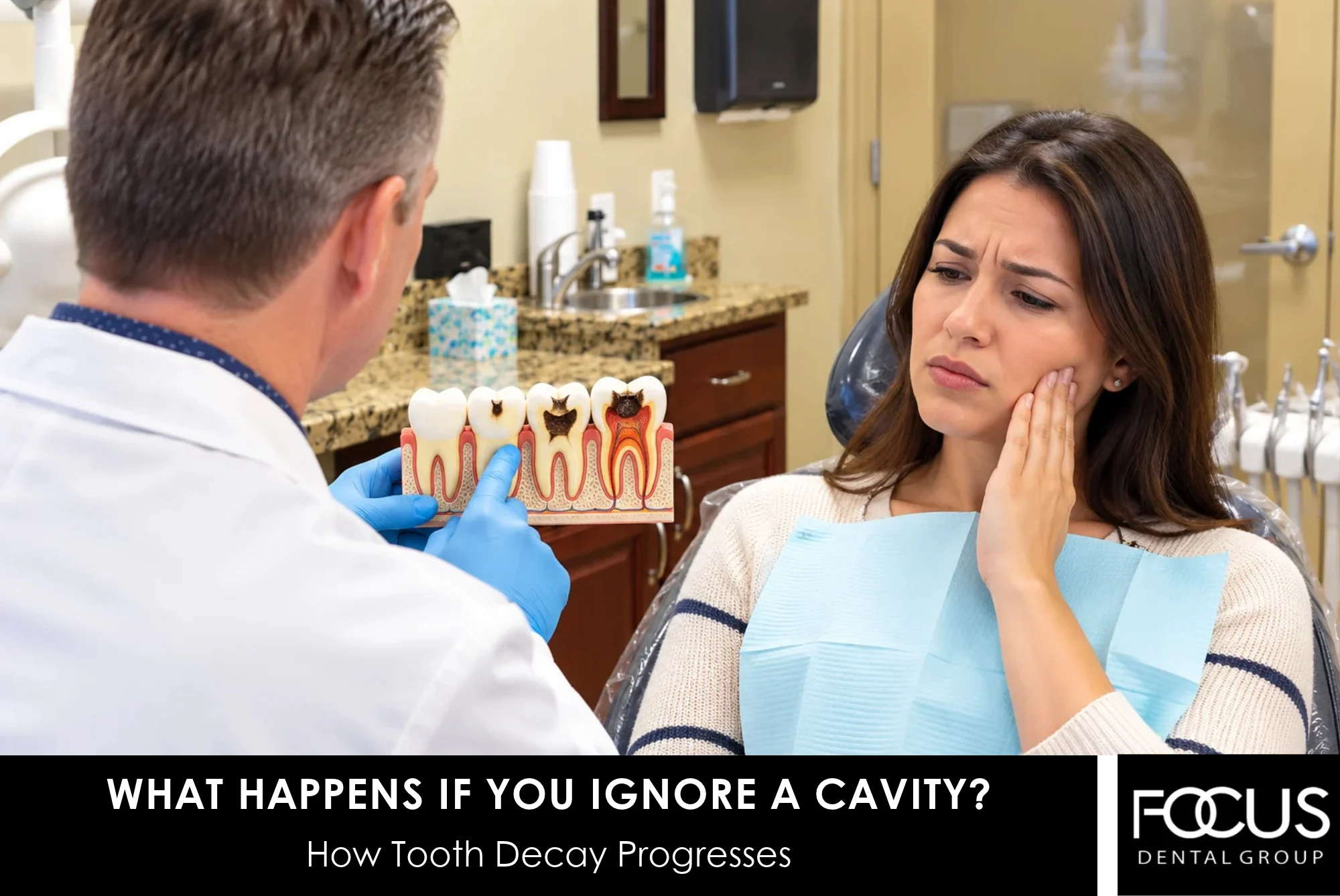
Tooth decay often begins without noticeable symptoms. A small area of enamel damage may seem insignificant, but untreated decay can progressively destroy tooth structure and eventually affect the dental pulp.
Understanding how cavities develop explains why early detection and treatment are important.
Stage 1: Enamel Demineralization
Bacteria within dental plaque metabolize fermentable carbohydrates and produce acids.
Repeated acid exposure removes minerals from enamel, sometimes creating early white-spot lesions.
At this stage, improved oral hygiene, fluoride, and dietary changes may help reverse noncavitated decay.
Stage 2: Enamel Cavitation
When mineral loss progresses, the enamel surface may break down and form a physical cavity.
Once a cavity develops, remineralization alone generally cannot restore the missing tooth structure.
Stage 3: Decay Reaches Dentin
Dentin is less mineralized than enamel and can be affected more rapidly once decay penetrates the outer enamel layer.
Patients may begin noticing sensitivity to sweets, cold beverages, or chewing.
Stage 4: Pulp Inflammation
Deep decay can irritate or infect the pulp, which contains nerves and blood vessels.
Symptoms may include lingering temperature sensitivity, spontaneous pain, or nighttime toothaches.
Some severely damaged teeth may require root canal treatment.
Stage 5: Dental Infection or Tooth Loss
Untreated pulpal infection can spread into tissues surrounding the root, potentially producing an abscess.
Severe structural destruction may make the tooth unrestorable and require extraction.
Frequently Asked Questions About Untreated Cavities
Can a Cavity Heal Without a Filling?
Early noncavitated enamel lesions may remineralize. Established cavities usually require professional treatment.
How Fast Does Tooth Decay Progress?
Progression varies depending on oral hygiene, diet, saliva, fluoride exposure, and individual risk factors.
Can You Have a Cavity Without Pain?
Yes. Many cavities are painless until decay becomes advanced.
What Happens If an Abscess Is Ignored?
Infection may spread and cause serious complications. Prompt treatment is necessary.
Can Antibiotics Cure a Cavity?
No. Antibiotics do not remove decay or eliminate the underlying source of a dental infection.
Contact Information
Focus Dental Group 6770 S 900 E, Suite 301 Midvale, UT 84047 Phone: (801) 255-7101 Website: focusdentalgroup.com Request an Appointment
Schedule an examination if you suspect a cavity or have unexplained tooth sensitivity.