
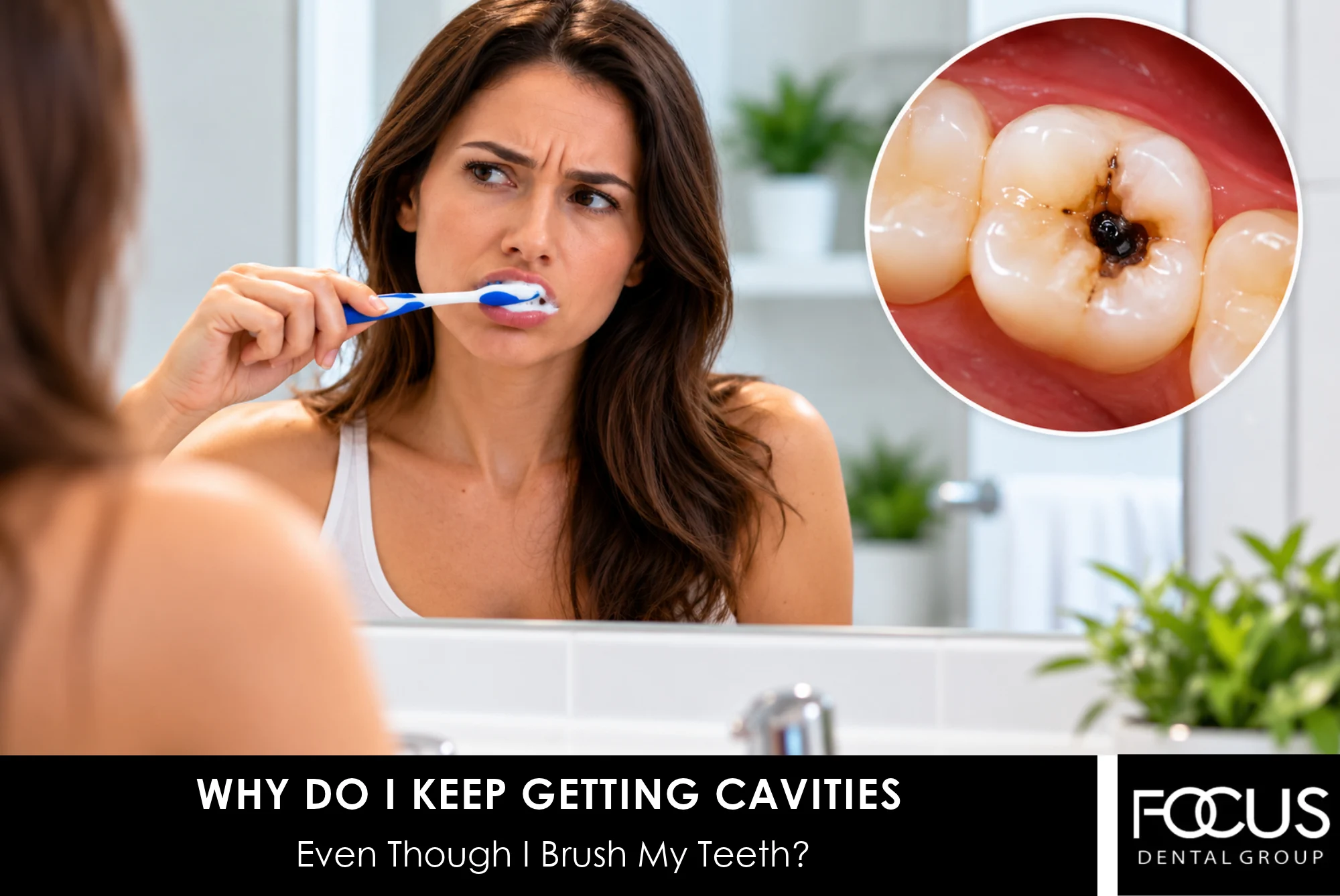
Brushing twice daily is essential for oral health, but it does not eliminate every factor contributing to tooth decay. Some patients continue developing cavities despite maintaining what appears to be a consistent oral hygiene routine.
Understanding the relationship between bacteria, diet, saliva, fluoride, and individual risk factors can help explain why cavities keep occurring.
How Do Cavities Develop?
Tooth decay occurs when bacteria within dental plaque metabolize sugars and other fermentable carbohydrates, producing acids that remove minerals from enamel.
When acid exposure repeatedly exceeds the tooth’s ability to remineralize, decay can progress.
Are You Brushing Effectively?
Brushing technique matters as much as frequency.
Plaque can remain along the gumline, between teeth, and in deep grooves even when someone brushes regularly.
Use a soft-bristled toothbrush, fluoride toothpaste, and gentle circular movements for approximately two minutes twice daily.
How Does Snacking Affect Cavity Risk?
Frequent consumption of sugary or starchy snacks exposes teeth to repeated acid attacks.
Sipping sweetened beverages throughout the day can create similar conditions.
The frequency of sugar exposure can be as important as the total amount consumed.
Can Dry Mouth Cause Cavities?
Yes. Saliva helps neutralize acids, clear food particles, and supply minerals that support enamel.
Dry mouth may result from medications, dehydration, medical conditions, or salivary gland dysfunction.
Patients with reduced saliva often have an increased risk of tooth decay.
What Else Increases Cavity Risk?
Deep tooth grooves, exposed roots, orthodontic appliances, previous cavities, inadequate fluoride exposure, and certain dietary habits can contribute.
A personalized cavity-risk assessment can help identify which factors are most relevant.
How Can You Prevent Recurrent Cavities?
A dentist may recommend prescription-strength fluoride, professional fluoride varnish, dental sealants, improved interdental cleaning, or dietary adjustments.
Addressing dry mouth and reviewing medications may also be helpful.
Frequently Asked Questions About Recurrent Cavities
Can Genetics Affect Cavity Risk?
Genetic factors may influence enamel, saliva, and tooth anatomy, but environmental and behavioral factors remain important.
Does Flossing Help Prevent Cavities?
Cleaning between teeth removes plaque from surfaces a toothbrush may not reach.
Can Cavities Develop Under Fillings?
Yes. Recurrent decay can develop around restoration margins.
Is Mouthwash Enough to Prevent Cavities?
No. Fluoride mouthwash may provide additional protection, but it does not replace brushing and interdental cleaning.
Should I Use Prescription Fluoride Toothpaste?
Patients at elevated cavity risk may benefit from higher-fluoride products when prescribed by a dental professional.
Contact Information
Focus Dental Group 6770 S 900 E, Suite 301 Midvale, UT 84047 Phone: (801) 255-7101 Website: focusdentalgroup.com Request an Appointment
Schedule a dental evaluation to identify potential causes of recurring cavities and discuss a personalized prevention plan.