
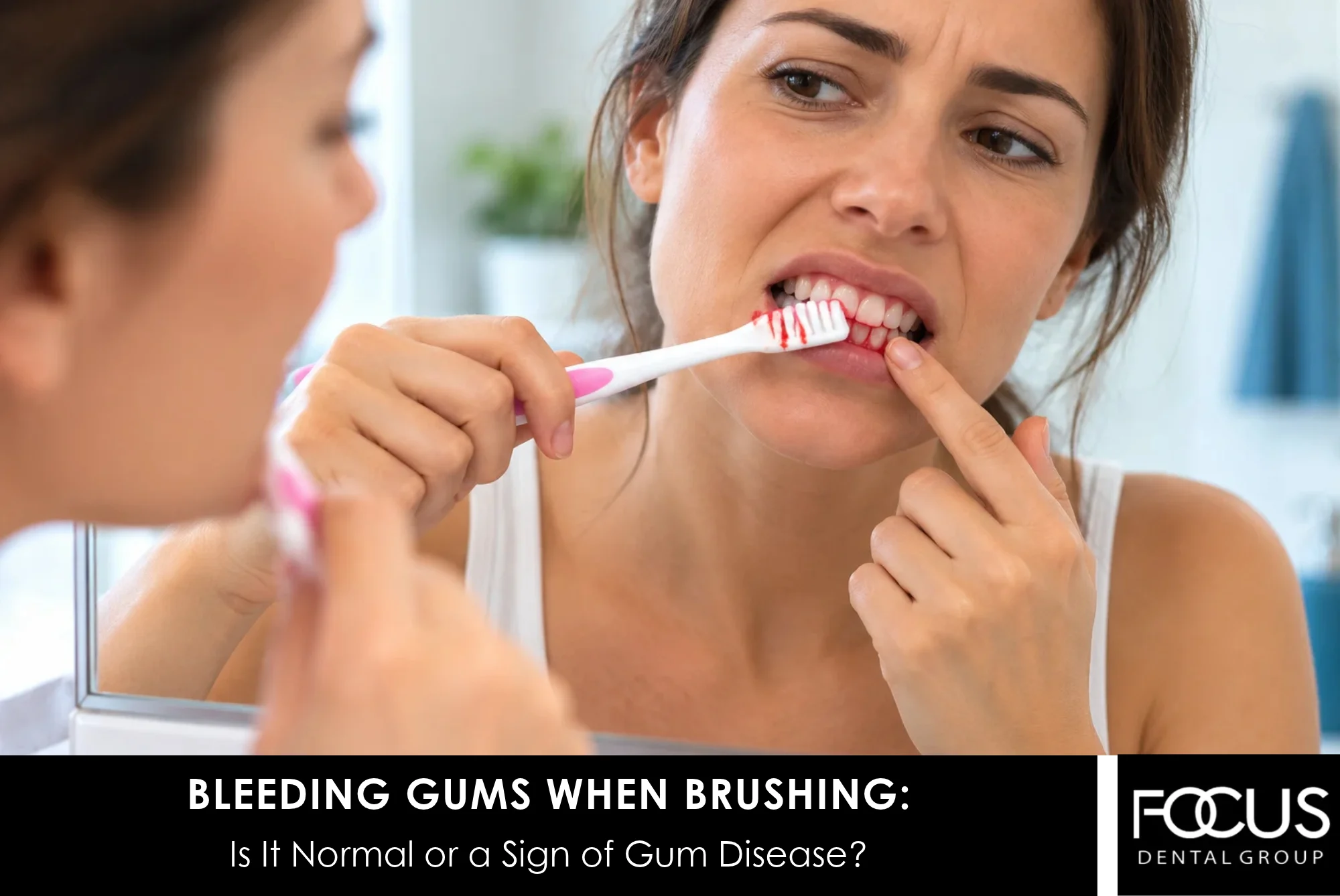
Seeing blood when brushing or flossing can be concerning. Although occasional bleeding may result from minor irritation, recurring bleeding is not considered a normal sign of healthy gums.
In many cases, bleeding is associated with gingival inflammation caused by plaque accumulation. Identifying the cause early can help prevent more serious periodontal problems.
Why Do Gums Bleed During Brushing?
Dental plaque is a bacterial biofilm that continuously forms on teeth.
When plaque accumulates near the gumline, the body’s inflammatory response can cause redness, swelling, tenderness, and bleeding.
This early inflammatory condition is called gingivitis.
What Is the Difference Between Gingivitis and Periodontitis?
Gingivitis affects the gum tissues without causing the attachment and bone loss associated with periodontitis.
With improved plaque control and professional care, gingivitis is generally reversible.
Periodontitis involves destruction of the tissues and bone supporting the teeth. Although it can often be managed successfully, lost periodontal support does not automatically regenerate.
Can Other Conditions Cause Bleeding Gums?
Yes. Aggressive brushing, certain medications, hormonal changes, poorly fitting dental appliances, and some systemic health conditions can contribute.
Blood-thinning medications may increase bleeding, but patients should never discontinue prescribed medication without consulting their healthcare provider.
How Is Gum Disease Diagnosed?
Dentists evaluate gum inflammation, measure periodontal pocket depths, assess clinical attachment levels, and look for bleeding during examination.
Dental X-rays may help identify bone loss.
These findings allow clinicians to distinguish gingivitis from periodontitis and develop an appropriate treatment plan.
How Can You Stop Your Gums From Bleeding?
Brush gently twice daily using fluoride toothpaste and clean between teeth regularly.
Professional dental cleaning can remove plaque and hardened tartar that cannot be eliminated through home brushing alone.
Patients with periodontitis may need scaling and root planing, periodontal maintenance, or referral to a specialist.
Frequently Asked Questions About Bleeding Gums
Should I Stop Flossing If My Gums Bleed?
Usually not. Gentle, consistent interdental cleaning may improve plaque-related inflammation. Persistent bleeding should be evaluated.
Can Gingivitis Go Away?
Yes. Plaque-induced gingivitis is generally reversible with effective oral hygiene and professional care.
Does Bleeding Always Mean Gum Disease?
No. Other causes exist, but repeated bleeding warrants assessment.
Can Gum Disease Cause Tooth Loss?
Advanced periodontitis can damage supporting bone and tissues, increasing the risk of tooth mobility and tooth loss.
How Quickly Should I See a Dentist?
Arrange an appointment for recurrent bleeding, especially if accompanied by swelling, persistent bad breath, or gum recession.
Contact Information
Focus Dental Group 6770 S 900 E, Suite 301 Midvale, UT 84047 Phone: (801) 255-7101 Website: focusdentalgroup.com Request an Appointment
Contact Focus Dental Group if you are experiencing bleeding gums or other symptoms of periodontal disease.