
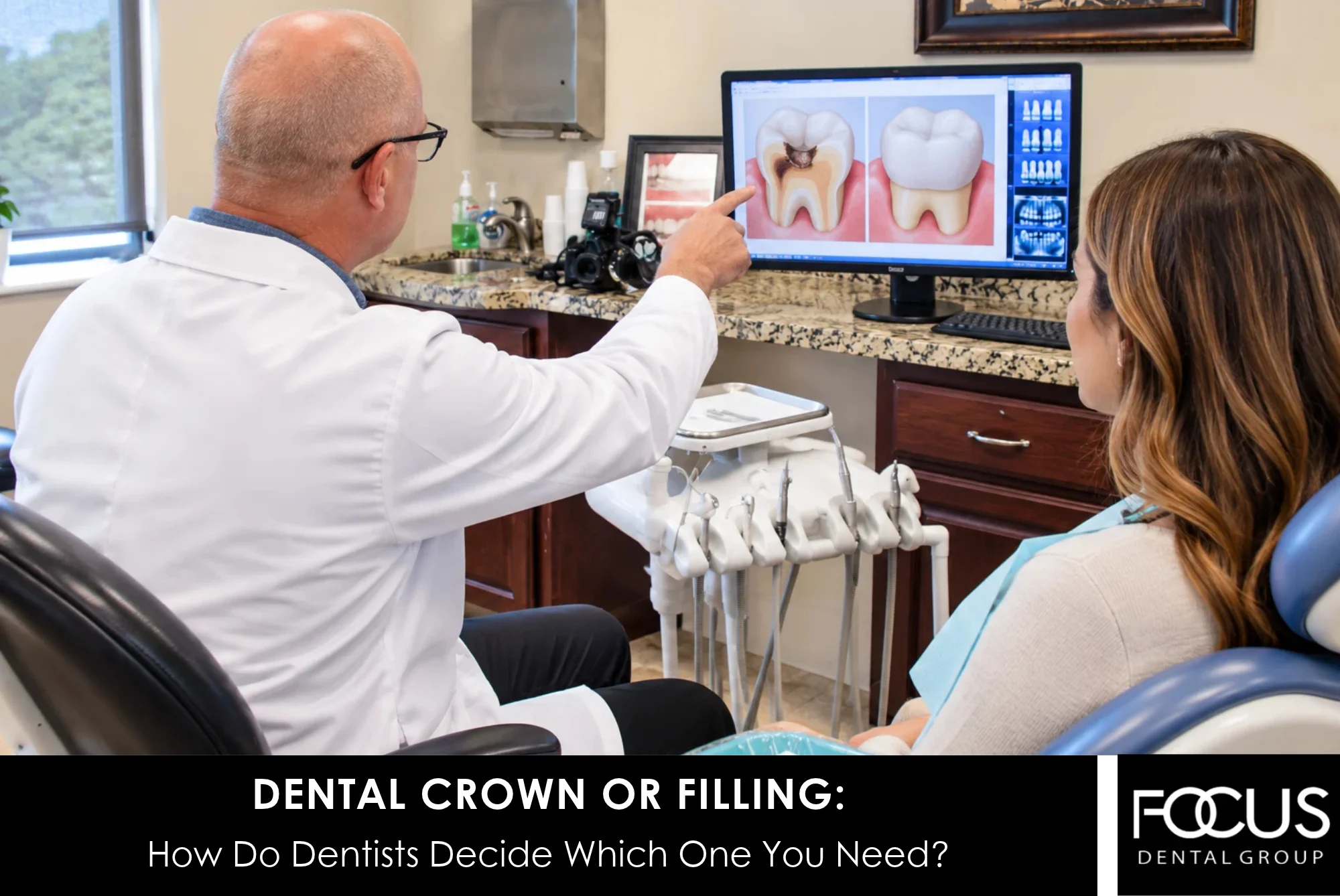
When a tooth develops decay or structural damage, the appropriate restoration depends on how much healthy tooth structure remains and how well the tooth can withstand chewing forces.
Dental fillings and crowns are both common restorative treatments, but they serve different purposes.
What Is a Dental Filling?
A filling replaces a localized area of tooth structure removed because of decay or damage.
Tooth-colored composite resin is commonly used because it bonds to the tooth and can be matched to its natural appearance.
Fillings are often appropriate when sufficient healthy tooth structure remains to support the restoration.
What Is a Dental Crown?
A crown is a custom restoration that covers most or all of the visible portion of a prepared tooth.
Crowns may be made from ceramic, zirconia, metal, or combinations of materials.
They are commonly considered when a tooth has extensive damage, a large existing restoration, or an elevated risk of fracture.
How Does a Dentist Choose Between a Crown and a Filling?
The decision involves the size and location of decay, remaining enamel and dentin, condition of the tooth’s cusps, bite forces, and overall tooth prognosis.
A small cavity may be treated predictably with a filling, while a tooth with extensive structural loss may benefit from a crown or another indirect restoration.
Does a Root Canal Always Require a Crown?
Not always. Posterior teeth often benefit from cuspal coverage after root canal treatment because of their structural condition and chewing demands.
Some anterior teeth may be restored with more conservative methods when adequate tooth structure remains.
Are There Alternatives to Full Crowns?
Inlays, onlays, and partial-coverage restorations may be suitable for selected teeth.
These options can preserve additional tooth structure while reinforcing damaged areas.
Frequently Asked Questions About Crowns and Fillings
Is a Crown Stronger Than a Filling?
A crown may provide better protection for certain extensively damaged teeth, but it is not automatically the best treatment for every cavity.
How Long Do Dental Crowns Last?
Many crowns function for 10 to 15 years or longer, although longevity varies considerably.
Can a Large Filling Cause a Tooth to Crack?
Large restorations can leave remaining tooth walls vulnerable to fracture, particularly under heavy chewing forces.
Does Getting a Crown Hurt?
Local anesthesia is commonly used to keep patients comfortable during tooth preparation.
Can a Crown Get a Cavity?
Yes. Decay can develop at crown margins where natural tooth structure remains exposed.
Contact Information
Focus Dental Group 6770 S 900 E, Suite 301 Midvale, UT 84047 Phone: (801) 255-7101 Website: focusdentalgroup.com Request an Appointment
Schedule an evaluation to determine the most appropriate restoration for a damaged or decayed tooth.