
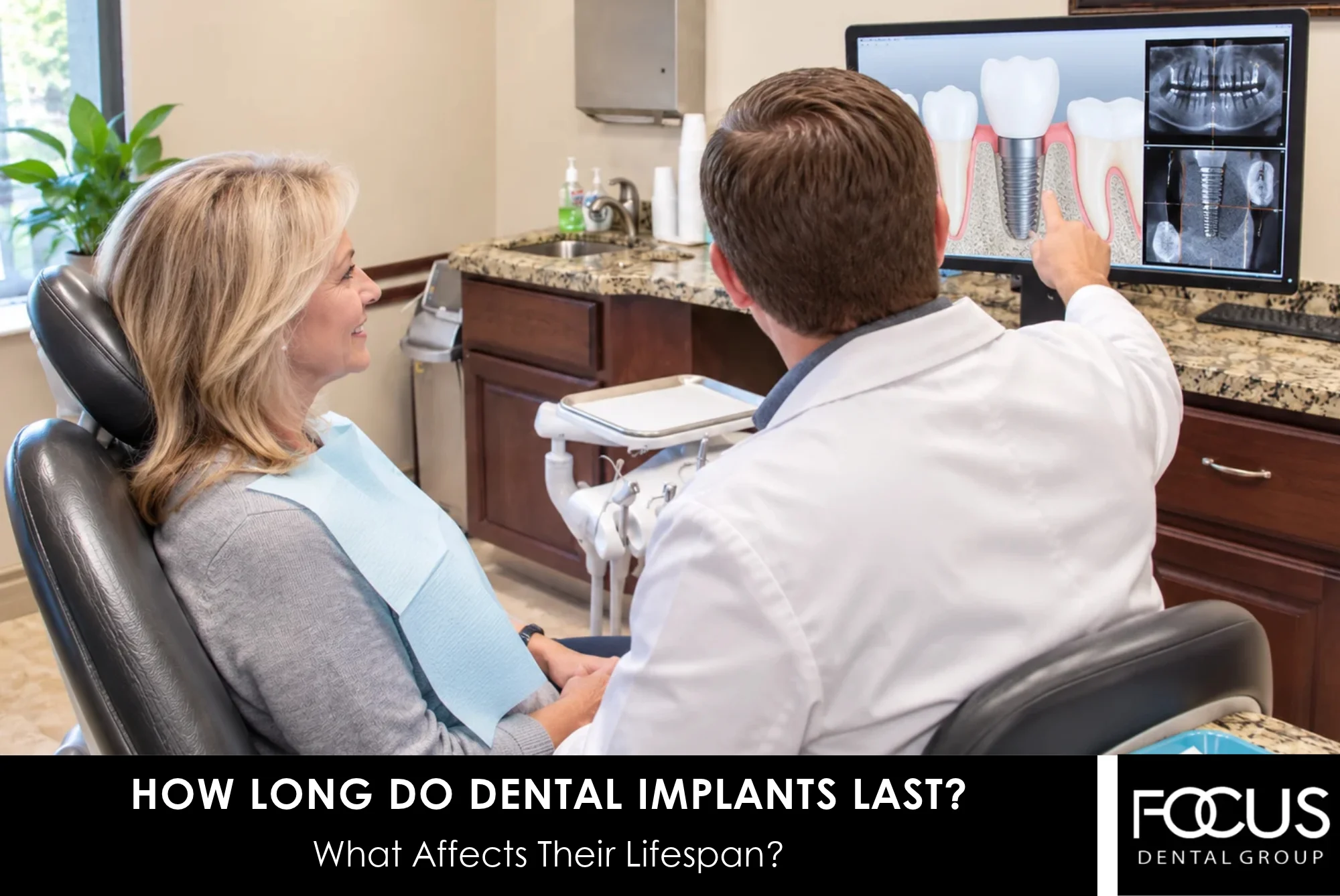
Dental implants are a widely used solution for replacing missing teeth because they can provide stable support for restorations while helping patients regain chewing function.
However, dental implants are not maintenance-free or guaranteed to last forever. Their long-term success depends on several biological, mechanical, and behavioral factors.
How Long Can Dental Implants Last?
Research has demonstrated high implant survival rates over 10 years and longer in appropriately selected patients.
Some implants remain functional for decades, but individual outcomes vary.
It is also important to distinguish the implant fixture from the crown or prosthesis attached to it. The restoration may require replacement even when the implant itself remains healthy.
What Factors Affect Implant Longevity?
Healthy supporting bone and gum tissues are essential for long-term stability.
Smoking, poorly controlled diabetes, a history of periodontal disease, and inadequate plaque control can increase the risk of complications.
Heavy bite forces, teeth grinding, and certain prosthetic designs may also affect mechanical longevity.
What Is Peri-Implantitis?
Peri-implantitis is an inflammatory condition involving tissues around an implant, accompanied by progressive supporting bone loss.
Symptoms may include bleeding, swelling, discharge, or changes in the surrounding gum tissues.
Regular professional monitoring is important because implant-related disease can sometimes progress with relatively little discomfort.
How Can You Protect Dental Implants?
Brush twice daily and clean around implants using techniques recommended by your dental team.
Attend periodic examinations and professional maintenance appointments.
Patients who grind their teeth may benefit from an appropriately designed protective appliance.
Can a Failed Implant Be Replaced?
In some cases, yes. Replacement depends on the cause of failure, remaining bone, infection status, and overall treatment feasibility.
Additional procedures may be required before another implant can be considered.
Frequently Asked Questions About Dental Implant Lifespan
Are Dental Implants Permanent?
They are intended as long-term tooth replacements, but lifetime success cannot be guaranteed.
Do Implant Crowns Need Replacement?
Yes. Crowns can wear, fracture, loosen, or require replacement over time.
Can Dental Implants Get Cavities?
The implant and artificial crown cannot develop tooth decay, but surrounding gums and bone can develop disease.
Does Smoking Affect Implant Success?
Yes. Smoking is associated with increased risks of implant complications and failure.
How Often Should Implants Be Checked?
Monitoring frequency should reflect periodontal history, implant condition, oral hygiene, and other individual risk factors.
Contact Information
Focus Dental Group 6770 S 900 E, Suite 301 Midvale, UT 84047 Phone: (801) 255-7101 Website: focusdentalgroup.com Request an Appointment
Contact Focus Dental Group to discuss implant restoration, maintenance, and long-term oral health.