
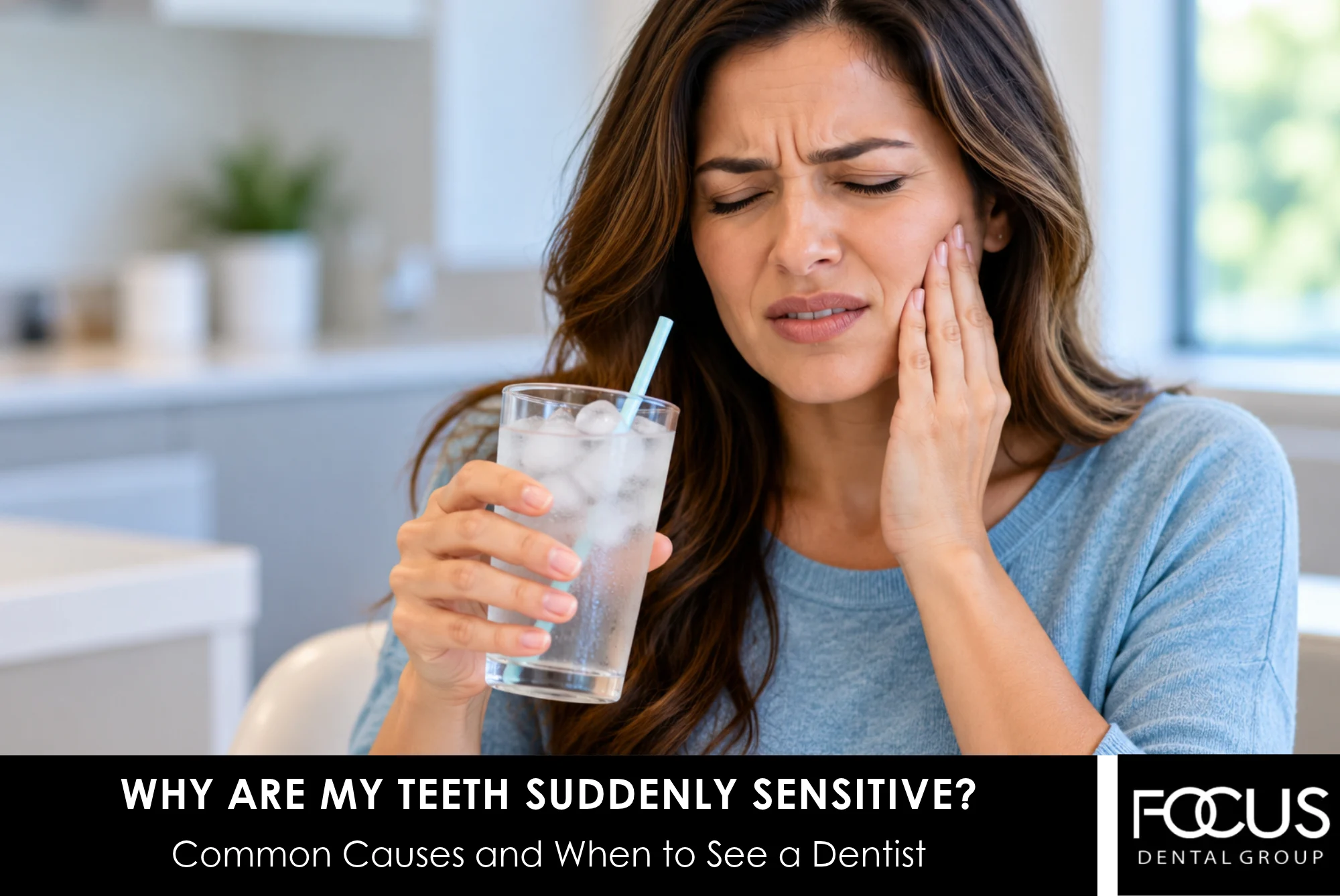
Sudden tooth sensitivity can make everyday activities uncomfortable, especially when drinking cold water, enjoying hot coffee, or eating something sweet. Although occasional sensitivity may be temporary, persistent or worsening discomfort can indicate an underlying dental condition that requires treatment.
Understanding why teeth become sensitive can help patients recognize when professional evaluation is necessary.
What Causes Tooth Sensitivity?
Healthy enamel protects the underlying dentin, which contains microscopic tubules connected to the tooth’s nerve tissue.
When enamel becomes worn or the gums recede, dentin may become exposed. Temperature changes, acidic foods, and other stimuli can then produce sharp discomfort.
Common Reasons Teeth Become Sensitive
Enamel erosion from acidic foods and beverages can gradually expose vulnerable tooth structures.
Gum recession may expose tooth roots, which lack the protective enamel covering found on tooth crowns.
Other causes include cavities, cracked teeth, worn fillings, teeth grinding, recent whitening treatments, and inflammation inside the tooth.
Why Is Only One Tooth Sensitive?
Sensitivity isolated to one tooth may indicate localized decay, a defective restoration, a crack, or inflammation affecting the dental pulp.
Pain that lingers after exposure to hot or cold temperatures deserves particular attention because it may indicate more significant pulpal inflammation.
How Do Dentists Diagnose Tooth Sensitivity?
A dentist may examine the teeth and gums, review symptoms, evaluate existing restorations, and perform temperature or bite tests.
Dental X-rays may be recommended when decay, infection, or other structural problems are suspected.
What Treatments Can Help?
Treatment depends on the cause. Options may include desensitizing toothpaste, professional fluoride applications, bonding exposed surfaces, replacing damaged fillings, or treating cavities.
If the dental pulp is irreversibly inflamed or infected, root canal treatment or extraction may be necessary.
Frequently Asked Questions About Sensitive Teeth
Can Sensitive Teeth Heal on Their Own?
Temporary sensitivity sometimes improves, but sensitivity caused by cavities, fractures, or significant gum recession generally requires professional assessment.
Does Sensitive Toothpaste Really Work?
Products containing potassium nitrate or stannous fluoride may reduce dentin hypersensitivity when used consistently.
Can Brushing Too Hard Cause Sensitivity?
Yes. Aggressive brushing can contribute to gum recession and tooth surface wear.
Is Sensitivity After Whitening Normal?
Temporary sensitivity is common after bleaching and usually resolves, although persistent symptoms should be evaluated.
When Is Tooth Sensitivity an Emergency?
Severe spontaneous pain, facial swelling, fever, or difficulty swallowing warrants urgent dental or medical evaluation.
Contact Information
Focus Dental Group 6770 S 900 E, Suite 301 Midvale, UT 84047 Phone: (801) 255-7101 Website: focusdentalgroup.com Request an Appointment
Schedule a dental evaluation if sensitivity is persistent, worsening, or affecting your daily activities.